News
The Nanoscale Revolution: How Nanotechnology Is Changing the Face of Science and Industry
28 September 2024 | CIC
Hello chemical engineering and food engineering students!
Do you know about nanotechnology is changing the face of science and industry? For those who are not familiar with nanotechnology is changing the face of science and industry, you can read this article to enhance your knowledge about nanotechnology is changing the face of science and industry. Is it really important? Of course,The important matter of this is we must consistently improve our knowledge of chemical engineering.
Nanotechnology has quickly changed how we perceive the world by controlling matter at the nanoscale. This control has created new materials, devices, and systems, transforming industries and enhancing our everyday lives. This piece will delve into the present state of nanotechnology, its uses, and potential opportunities.
Introduction
Nanotechnology encompasses exploring and applying structures and devices at the nanoscale, typically ranging from 1-100 nanometers (nm). At this minute level, the principles of physics and chemistry differ from those at larger scales, leading to distinct properties and behaviors not present in larger structures. Nanotechnology has wide-ranging potential uses, from healthcare and energy to electronics and materials science.
Synthesis of Nanostructures

Picture 2. Synthesis of Nanostructure
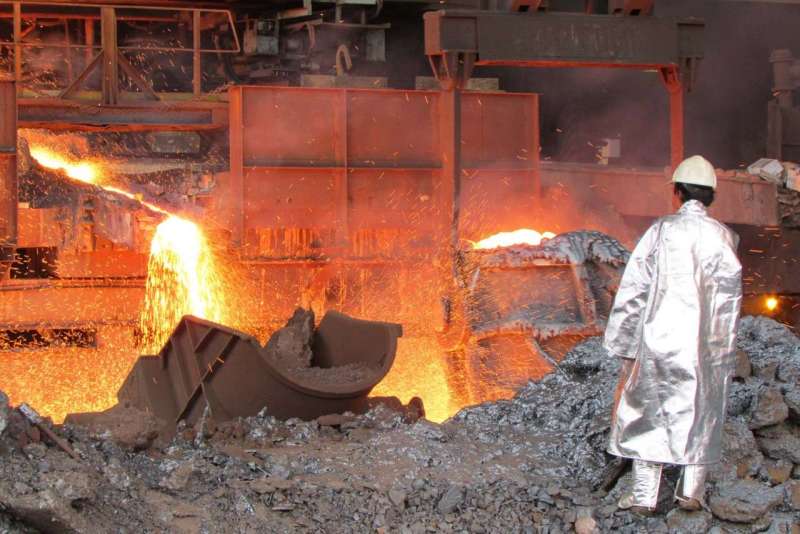
Controlled particle formation is a crucial synthetic pathway to nanoscale building blocks applicable to various technologies, from ceramics to pharmaceuticals. Some intriguing new nanoparticle formations consist of chainlike arrangements of particles with relatively low coordination numbers. They primarily fall into agglomerates (or aggregates) and aerogels. These structures can be distinguished by their morphology, including fractal dimension and coordination number, and the energies of the bonds holding the individual particles together.
Processing of Nanostructures
Assembly. The advancement of self-assembly techniques, which mimic biological processes, has significantly broadened the methods for constructing nanostructures. Our current techniques heavily rely on creating predetermined lithography patterns when designing complex materials such as electronic devices. New bonding, assembly, and linking macromolecules and nano-objects have been devised based on more intricate and individually weaker interactions, such as steric, electrostatic, hydrophobic, and hydrogen bonding, than the traditional electronic bond. Multiple bonding interactions are often necessary to stabilize complex nanostructures. These interactions form the basis for encoding information into nanostructures. Over the past decade, nanoscale objects like nanoparticles or nanocrystals have been arranged into regular arrays or supercrystals, which exhibit unique optical and electrical properties. Various suggestions have been made for patterning nanocrystals and nanotubes using biological molecules (Mucic et al., 1998; Alivisatos et al., 1996; Braun et al., 1998).
Templated growth of mesoporous materials. Significant progress has been made in the last ten years in synthesizing mesoporous inorganic solids (Antonelli & Ying, 1996). Early work demonstrated the possibility of using organic surfactant molecules to create a sophisticated pattern that could serve as a template for forming an inorganic phase. This has led to many exciting developments in chemical synthesis and immediate advancements in catalysis. Nanoporous media science, particularly the control of void space, has made substantial strides. For instance, new scaffolds and matrices for tissue repair and engineering have been realized, and a wide range of customized porous catalysts and membranes, such as Mobil's MCM-41, have achieved commercial success. In another instance, a Nylon-6 nanocomposite containing only two volume percent clay nanoparticles has a heat deformation temperature of 150°C, compared to 60°C for traditional Nylon-6.
Direct structuring. The capability to guide the assembly and arrangement of materials using nanomanipulation and nanolithography, often based on scanning microprobe techniques, has accomplished directed assembly and structuring of materials at the molecular level. New approaches in this area include 3-D printing and various forms of soft lithography.
Nanoimprint lithography will allow for imprinting at scales up to 10 nm on large surfaces at a relatively low cost.
Applications of Nanotechnology

Picture 3. Applications in Nanotechnology
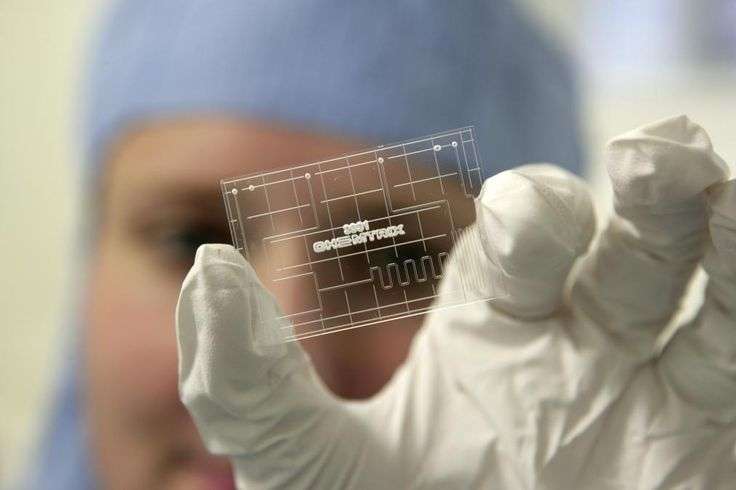
In medicine, nanotechnology has significantly impacted the field by allowing the creation of nanoparticles that can target particular cells or tissues, resulting in more efficient and precise treatments for diseases such as cancer and Alzheimer's. Additionally, nanoparticles can transport medications directly to the affected area, reducing side effects and enhancing patient outcomes. In the energy sector, nanotechnology is being utilized to design more effective solar and fuel cells by manipulating the structure and composition of materials at the nanoscale. This has led to devices that can convert solar and chemical energy into electrical energy more efficiently. Furthermore, nanotechnology has been utilized to produce novel materials with unique properties, such as increased strength and durability, which have substantial implications for industries like aerospace and automotive.
Application of Nanotechnology in Chemical Engineering
Nanotechnology can manipulate the structure of nanomaterials to enhance their properties. Due to the multiple characterization techniques available, nanotechnology can also offer insights into a particle's crystallite and agglomerate size.
Polymers manufactured in the chemical industry have their structure altered using nanotechnology for different chemical applications and industrial activities. Catalysis is a procedure often employed in the chemical industry to improve the efficiency of the synthetic chemistry of compounds by speeding up the reaction. Nanotechnology is now being utilized in the chemical industry to develop rules to increase the catalytic performance of industrially manufactured goods.
Challenges and Future Directions
Despite the numerous advancements in nanotechnology, significant challenges persist. Efforts are required to create more efficient and cost-effective techniques for synthesizing and manipulating nanomaterials. Furthermore, stringent safety and regulatory frameworks are necessary to ensure the safe use of nanomaterials in a wide range of applications. Nanotechnology is ready to play an increasingly crucial role in addressing some of the world's most critical challenges. It could result in development of more effective and sustainable methods for producing food and energy and new medical treatments and diagnostic tools to enhance human health and well-being.
Nanotechnology is a rapidly evolving field with the potential to transform various aspects of our lives. From healthcare and energy to materials science and beyond, the uses of nanotechnology are extensive and diverse. Although significant challenges remain, the potential benefits of nanotechnology make it an exciting and promising area of research and development.
It is crucial for chemical engineering and food engineering students to stay informed and up-to-date on topics such as nanotechnology is changing the face of science and industry, as this knowledge is vital for their understanding of the chemical industry. By doing so, they can expand their knowledge base and satiate their thirst for learning, ultimately enhancing their professional prospects. In conclusion, the importance of nanotechnology is changing the face of science and industry cannot be overstated, and it is essential for students to stay informed about this crucial aspect of chemical engineering.
Reference
Ariga, K. (2021). Nanoarchitectonics: what's coming next after nanotechnology?. Nanoscale Horizons.
Sahu, M. K., Yadav, R., & Tiwari, S. P. (2023). Recent advances in nanotechnology. International Journal of Nanomaterials, Nanotechnology and Nanomedicine.
Sharma, R., Sharma, K. S., & Kumar, D. (2022). Introduction to nanotechnology. Nanomaterials in Clinical Therapeutics: Synthesis and Applications.
Sangwai, J. S. (2020). Nanotechnology for energy and environmental engineering.
Khalid, M. (2020). Nanotechnology and chemical engineering as a tool to bioprocess microalgae for its applications in therapeutics and bioresource management. Critical reviews in biotechnology.
National Academies of Sciences, Engineering, and Medicine. (2022). New Directions for Chemical Engineering. National Academy of Sciences, Washington, DC (United States).
Popular Post