News
Industrial waste treatment of nickel smelters
17 July 2024 | CIC
Hello chemical engineering and food engineering students!
Do you know about Industrial waste treatment of nickel smelters? For those who are not familiar with Industrial waste treatment of nickel smelters, you can read this article to enhance your knowledge about Industrial waste treatment of nickel smelters. Is it truly necessary? Absolutely. The crucial point here is that we must continuously enhance our understanding of chemical engineering.
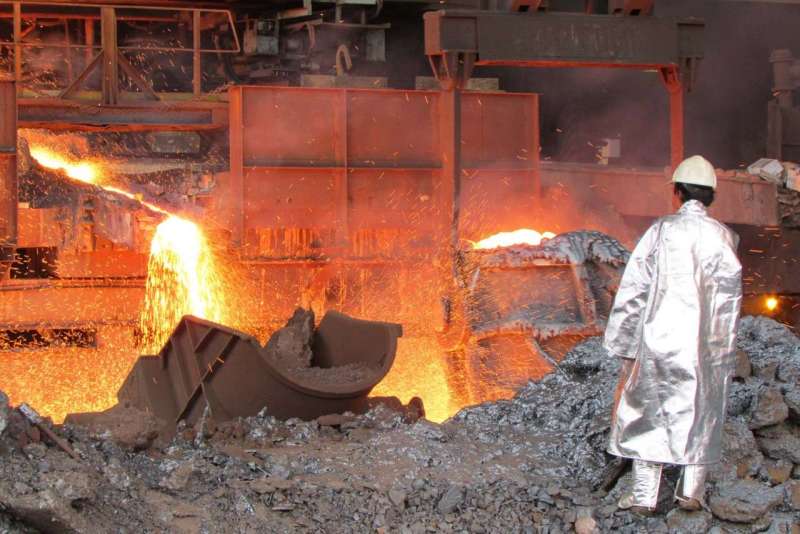
A smelter is a mining processing facility that works to increase the content of metals such as copper, gold, nickel, lead and silver until they reach a standard that has been determined as a raw material for the final product. The metals are purified of contaminants by crushing the ore, flotation for separation of valuable minerals, refining through smelting, separating the metal from residual mineral impurities, and in some cases, final refining. A good smelting and ore processing process creates a more efficient production environment and improves operational efficiency while also optimizing mineral metal production.
In line with Law No. 4/2009 on Mineral and Coal Mining, Indonesian metal mining companies are required to own smelters. This is part of the Indonesian government's efforts to encourage the construction of smelters. These smelters will give the mining industry self-sufficiency in processing the raw materials they produce. Apart from being a necessity for the industry, especially the mining industry, smelters can also contribute significantly to the economy. Through the smelting process, mining products get an increase in selling value which has the potential to create new jobs. In addition, the construction of new smelters can encourage the growth of regional potential and attract domestic and foreign investors.
Currently, Indonesia has a very large nickel industry. Referring to data from the Ministry of Energy and Mineral Resources, Indonesia currently has 44 smelters for nickel using the pyrometallurgical process which are already operating and 25 others are being built, while for nickel using the hydrometallurgical process, there are 3 smelters and 6 others which are already operating. under construction. With this amount, a lot of waste resulting from nickel smelting processing will be wasted.
Waste from smelter plants is categorized into two types: solid and liquid. For solid waste, there are tailings, slag, and dust. Tailings are the result of mineral extraction in the form of fine solids which contain heavy metals and hazardous substances.Nickel slag (Nickel Slag) is waste from the nickel processing industry to form a liquid, the heat then cools to form natural rock consisting of slag solid and porous slag (Ibrahim dkk., 2019). Furthermore, there is dust generated from nickel ore processing that contains various air pollutants such as nitrogen oxides and sulfur oxides.

Figure 1. Nickel Slag
Source : https://www.korotech.lt/
In addition to solid waste, there is also liquid waste, such as B3 waste, sulfuric acid waste, and water waste that contains pollutants such as heavy metals, acids, and cyanide.
Waste from nickel smelter plants can pollute the environment including, the impact is as follows:
It cannot decompose itself so it damages the soil structure, which causes physiological changes direct and cumulative in humans, plants and animals.
Death of fish, poisoning of humans and livestock, death of plankton, damaged water sources, accumulation in fish and molluscs.
Causes respiratory problems, eye and nerve irritation to humans; increased leaching, soil cations, influence forest productivity and nitrogen fixation.
eutrophication, heavy metal contamination of water and soil; and acid rain.
All of these negative environmental impacts are caused by nickel waste, both liquid and solid (Ibrahim dkk., 2019).
One of the nickel smelter wastes that can be reused is nickel slug. Slug can be utilized into several kinds of products, for example fertilizer, cement clinker, brick, ceramic glass, mineral fibre, and road base.

Figure 2. Brick from nickel slag
Source : https://tbpnickel.com/
In general, the process of treating nickel slug waste into bricks are consists of the following things. This slag usually contains components that can be reprocessed for use in brick production. The following are the general steps in this processing process:
Slag Collection, slag produced from the nickel smelting process is collected and separated from other materials such as metals that may still be mixed. This must be made as effective as possible, namely paying attention to the production flow so that slag can be separated and collected directly.
Sorting and Processing, the slag is then sorted to separate fractions suitable for use in brick making. The selected fraction usually has a certain chemical composition and physical properties that allow it to be molded into bricks.
Mixing, the selected slag is then mixed with certain additional ingredients. This additional material can be a binder such as,
Cement such as Portland cement
Other chemicals (retarder and aeration agent) which are needed to improve the mechanical properties and stability of the bricks produced.
Molding and drying, The mixture of slag and additives is fed into a suitable mold. This mold usually has a shape and size that has been determined according to the specifications of the bricks to be produced. The bricks are formed from the mold and then dried. This drying process aims to remove moisture that is still present in the mixture and to increase the strength of the bricks after the compaction process. Humidity limits that are considered reasonable generally range from 1 to 6 %.
Compaction and Hardening, The bricks are compacted and tested to ensure that their strength and durability are up to the required standards. The hardening process may involve the use of mechanical pressure or additional heating depending on the type of additional material used.
However, currently there is also nickel waste processing being developed to produce liquid product (slag cement) as follows (Veselovsky, 2021).
The first step is to hold the slag/metal melt in a crucible for 15 min at 1300–1400°C, resulting in the formation of a nickel-rich (15–18%) matte melt at the bottom.
After this melt cools and hardens, it is removed from the crucible, separated from the slag, and inspected in an electron microscope. The resulting matte is suitable for processing into ferronickel via the classical process.
Third, the slag from the preceding step was reduced for 30–40 min at 1500–1600°C using crushed electrode, since the low density and porosity of coke means it is not suitable for this purpose. The slag was vigorously agitated by the release of internal gas. The reduced iron collects to form large inclusions, and settles to the bottom, collecting non-ferrous impurity-metal solutes as it descends. As in the preceding step, the metal was allowed to cool, and the bottom ingot was removed for analysis. The study says that the resulting metal, which was used (after preliminary desulfurization) to produce structural steel alloy, and the gangue slag (with Ni and Fe content less than 0.1%) which can be used with blast-furnace slag to produce Portland slag cement .
The utilization of nickel waste can have a good impact on the surrounding environment, nickel slug waste can be reduced while saving natural resources, because the waste can be used as raw material in the production of new products. In addition, the utilization of nickel slugs can create new jobs and potentially increase the economic value of the community.
It is crucial for chemical engineering and food engineering students to stay informed and up-to-date on topics such as Industrial waste treatment of nickel smelters, as this knowledge is vital for their understanding of the chemical industry. By doing so, they can expand their knowledge base and satiate their thirst for learning, ultimately enhancing their professional prospects. In conclusion, the importance of Industrial waste treatment of nickel smelters cannot be overstated, and it is essential for students to stay informed about this crucial aspect of chemical engineering.
Reference
brahim, M. M. H., Karim, R., & Nide, J. (2019). Pengendalian Dampak Limbah Pabrik (Slag) Pada Pengolahan Bijih Nikel Menjadi Nikel Pig Iron (Npi) di PT. Fajar Bakti Lintas Nusantara Kecamatan Pulau Gebe Kabupaten Halmahera Tengah Propinsi Maluku Utara. JTU-Jurnal Tambang Umum, 2(1), 34-38.
Veselovsky, A. A. (2021). Recycling of Nickel-Slag Tailings into Liquid Products: A Case Study using Slag from the Southern Urals Nickel Plant. Metallurgist, 65(1), 113-120.
Mulianti, F. D. (2023, 19 October). Sudah Kebanyakan! Jumlah Smelter Nikel di RI Tembus 116 Unit. Retrieved July 15, 2024, from https://www.cnbcindonesia.com/news/20231019133409-4-481968/sudah-kebanyakan-jumlah-smelter-nikel-di-ri-tembus-116-unit
Popular Post
SCHOLATION #24 Find Out More About “Bintang Beasiswa Glow & Lovely 2025”
Scholarship
26 February 2025