News
Get to Know about Olefin! The Cornerstone of Petrochemical?!
17 July 2024 | CIC
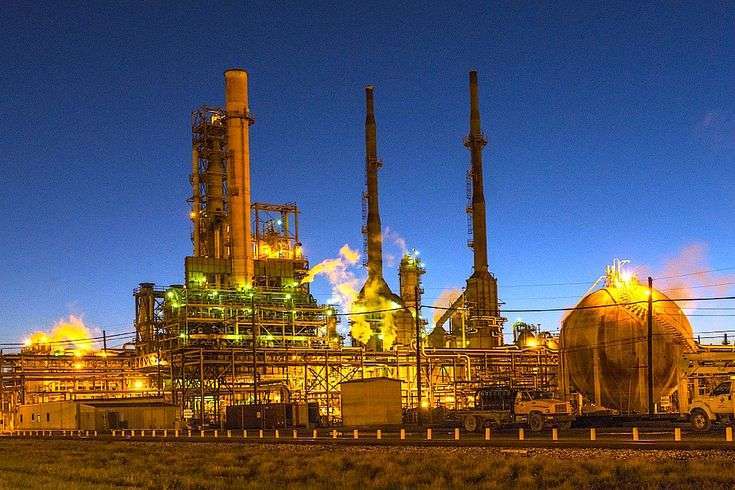
Hello chemical engineering and food engineering students!
Do you know about Olefins as the main raw material for Petrochemicals? For those who are not familiar with Olefins as the main raw material for Petrochemicals, you can read this article to enhance your knowledge about Olefins as the main raw material for Petrochemicals. Is it really important? Of course, the important matter of this is we must consistently improve our knowledge of chemical engineering.
Petrochemical industry is one of the industries that has a long industrial chain from upstream to downstream. This industry is based on petroleum-derived hydrocarbons that are processed to products that can be used by consumers, such as paint, yarn, rubber, and others. The upstream part of the petrochemical industry acts as a pioneer industry which produces products in the form of olefins. Olefins are found in almost every part of modern life, from the plastic bottles we use daily to the fibers in our clothing. These hydrocarbon compounds, containing distinctive double bonds, serve as the main raw material for a wide variety of petrochemical products that support contemporary life.
Olefins are a kind of unsaturated hydrocarbon that has one or more pairs of carbon atoms bound in a double with the formula CnH2n. For process engineers, olefins are more than just chemical compounds; they are the key that unlocks the gateway to the world of petrochemicals, it possess several advantages that make them ideal feedstocks in the petrochemical industry, such as:
High Reactivity: The double bonds in olefins are readily broken and reformed, allowing for diverse chemical reactions to produce a wide range of derivatives.
Product Diversity: Olefins can be processed into a vast array of petrochemical products, including plastics, synthetic fibers, synthetic rubbers, detergents, solvents, and pharmaceutical raw materials.
Abundant Resource: Olefins are derived from crude oil and natural gas, two of the world's most plentiful natural resources.
A deep understanding of the properties and processing of olefins is a critical foundation for engineers who design and operate petrochemical plants to ensure efficiency and sustainability. In industry, olefin plants are used for the production of ethylene and propylene, which are the main feedstocks for the production of polyolefins, which account for 50–60% of all commercial organic chemicals.
One of the commonly used methods in industrial olefin production is steam cracking. This process involves several main stages, namely cracking, cooling, compression and separation. A schematic diagram of this process is shown in Figure 1 below:

Figure 1. Steam cracking process
In the steam cracking process, saturated hydrocarbons break into smaller unsaturated hydrocarbons through a reaction with steam. The feed for the steam cracking unit can be gaseous or liquid hydrocarbons, such as ethane, propane, butane, naphtha, and gas oil. Butadiene, butylene, aromatics, and benzene-rich pyrolysis gasoline are produced when heavy liquid feeds such as naphtha and gas oils are used as feedstock, whereas methane, ethylene, propylene, and benzene can be produced from any optional feedstocks.
The first stage in this method is. cracking, breaking down long hydrocarbon molecules into smaller molecules such as olefins. This process is usually carried out at high temperatures and pressures to break the carbon bonds in the hydrocarbon molecules in furnace. After the cracking process, the resulting product will have a very high temperature. The resulting olefins need to be cooled in quench tower before they can be processed further. Cooling is done to reduce the temperature of the product so that it can be compressed efficiently without damaging important components in the system. The next stage is compression, where the cooled olefins are compressed into a denser gas. Compression aims to increase the gas pressure so that it can be processed further efficiently. The last stage in the olefin production process is separation. In this stage, the gases from the cracking and compression process are separated based on their physical properties such as boiling point or solubility. This separation is important to obtain pure olefin products that are ready to be used in various industrial applications, which shown in Figure 2 below:

Figure 2. Petrochemical products derived from olefin
Polyethylene: Polyethylene, the most widely produced plastic globally, finds its application in a vast array of products, including plastic bags and packaging. Beyond its role as a base material, polyethylene often incorporates various additives such as fillers, plasticizers, and pigments to enhance its properties.
PVC (Polyvinyl Chloride): PVC, a versatile plastic, is employed in the manufacturing of pipes and floor coverings. Its extensive applications extend to the construction and adhesives industries.
Ethanol: Ethanol, also known as alcohol, serves as a fuel and an intermediate in the production of various products, including acetic acid.
Ethylene Glycol: Ethylene glycol, or glycol, is utilized as an antifreeze in car radiators, particularly in cold climates.
Polypropylene: Polypropylene finds its application in the production of plastic bags and ropes. This material is known for its superior strength compared to polyethylene.
Glycerol: Glycerol has diverse applications across various industries, including cosmetics as a moisturizer, in the food industry, and even in the production of explosives such as nitroglycerin.
Isopropyl Alcohol: Isopropyl alcohol serves as the base material for the production of various other petrochemical products, including acetone.
Olefins make a significant contribution to the global economy. The olefin-driven petrochemical industry generates trillions of dollars annually and creates millions of jobs. On the other hand, olefins also have environmental impacts, such as greenhouse gas emissions and water pollution. Process engineers face those challenges of improving efficiency and sustainability in olefin production processes. New technologies like advanced catalysts and more energy-efficient separation methods are under continuous development to reduce environmental impact. Furthermore, the demand for olefins is predicted to keep rising with population growth and technological advancements. This presents opportunities for process engineers to innovate and design next-generation petrochemical plants that are more environmentally friendly and sustainable.
It is crucial for chemical engineering and food engineering students to stay informed and up-to-date on topics such as Olefins as the main raw material for Petrochemicals, as this knowledge is vital for their understanding of the chemical industry. By doing so, they can expand their knowledge base and satiate their thirst for learning, ultimately enhancing their professional prospects. In conclusion, the importance of Olefins as the main raw material for Petrochemicals cannot be overstated, and it is essential for students to stay informed about this crucial aspect of chemical engineering.
References
Gholami, Z., Gholami, F., Tišler, Z., & Vakili, M. (2021). A review on the production of light olefins using steam cracking of hydrocarbons. Energies, 14(23), 8190.
onesolution.pertamina.com. (2024, 21 Februari). Mengenal Olefin : Bahan Dasar Penting di Industri Petrokimia. Diakses pada 6 Juni 2024, dari https://onesolution.pertamina.com/Insight/Page/mengenal-olefin-bahan-dasar-penting-di-industri-petrokimia
Rahman, S. Irawan, A. & Kurniawan, T. (2020). KONVERSI HIDROKARBON MENJADI OLEFIN MELALUI PERENGKAHAN TERMAL DAN KATALITIK. JURNAL INTEGRASI PROSES, Vol 9, hal 12-19.
Sadrameli, S. M. (2015). Thermal/catalytic Cracking of Hydrocarbons for the Production of Olefins: A stateof-the-art review I: Thermal Cracking review. Fuel 140, 102-115.
Popular Post

TEFL Preparation #12 TOEFL ITP Authorized Test Center July 2025 Edition
TEFL Preparation
29 June 2025