News
Taming Flue Gas : Gas Processing and Emission Control Strategies for a Sustainable Future
17 July 2024 | CIC
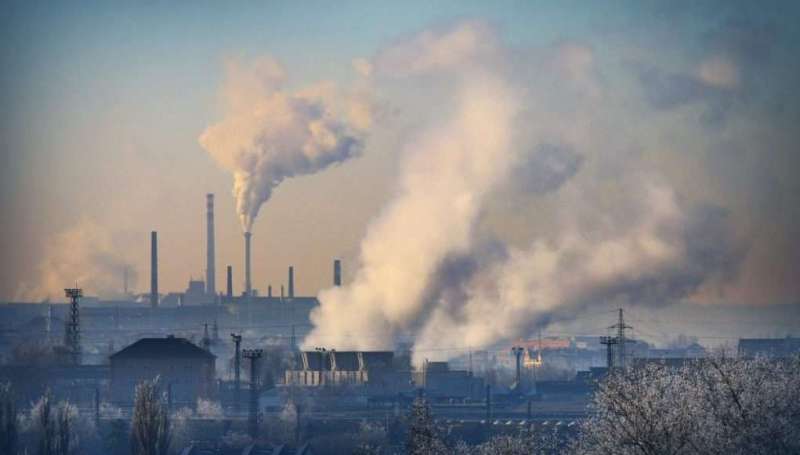
Hello chemical engineering and food engineering students!
Are you interested in exploring cutting-edge solutions for optimizing gas processing while minimizing environmental impact? This article offers valuable insights into the latest strategies for reducing harmful emissions and ensuring a sustainable future. By understanding the complex interplay between gas processing technologies and environmental protection, we can pave the way for cleaner, more efficient industrial practices.
In the modern era, industry continues to grow rapidly, producing various products and services that support human life. However, behind this progress, there are inevitable consequences: exhaust emissions that have the potential to pollute the environment. Therefore, gas treatment and emission control are crucial areas to preserve the environment and human health. Chemical engineering plays a central role in designing, operating, and optimizing gas treatment and emission control systems, ensuring the smooth running of industrial processes by minimizing their negative impacts. Gas treatment and emission control is an important field in modern industry. The process aims to clean exhaust gases of harmful pollutants before they are released into the atmosphere. This is important for maintaining air quality and protecting human health and the environment. Chemical engineering plays a crucial role in designing, operating, and optimizing gas treatment and emission control systems.

Figure 1. Chemical Engineering
Chemical engineering students are equipped with the fundamental knowledge and skills to understand the chemical and physical principles underlying gas treatment and emission control processes. They learn concepts such as mass transfer, chemical equilibrium, thermodynamics and reaction kinetics, all of which play an important role in the design and operation of these systems. The problem-solving, critical thinking, and collaboration skills instilled in chemical engineering education are also very important in this field. Chemical engineers must be able to analyze data, identify problems, and design effective and efficient solutions to meet stringent emission requirements.
Natural gas consists mainly of methane (CH4), a compound made up of one carbon atom and four hydrogen atoms. Millions of years ago, plant and animal remains were buried in thick layers of earth and decomposed. This process produced organic matter that was then buried by sand and mud and hardened into rock. The pressure and heat from this process turned most of the organic matter into coal, oil and natural gas - which is a mixture of odorless gases.

Figure 2. Petroleum and Natural Gas Formation
Source: https://surabaya.proxsisgroup.com/proses-pembentukan-dan-pengolahan-gas-alam/
Processing natural gas to produce a profitable end product requires caution as it is potentially dangerous. Small changes in the process can have a big impact on the final result. A well-designed, maintained and operated control system is essential to:
Speeding up startup
Increase operational profitability
Preventing forced shutdowns
Lower operation and maintenance costs
Aiding environmental compliance
Support plant safety
Natural Gas Processing is a complex series of industrial steps to clean raw natural gas by separating impurities as well as non-methane hydrocarbons and liquids, producing dry natural gas. Natural gas is extracted from boreholes and varies in composition depending on location and geologic conditions. Natural gas is often found together with oil in the same reservoir. There are two types of natural gas: associated-dissolved, which is natural gas dissolved in crude oil, and that which consists of various hydrocarbon compounds such as methane (CH4), benzene (C6H6), and butane(C4H10). Natural gas processing plants refine raw natural gas from underground gas fields, separating contaminants and treating heavy hydrocarbons for other commercial purposes. Some processing plants may produce semi-finished products consisting mainly of pure methane, ethane, nitrogen and sometimes carbon dioxide. These products may be further processed in downstream plants or used as feedstock for chemical manufacturing.
Crude natural gas is usually obtained from three main types of wells: crude oil wells, gas wells and condensate wells. Associated gas is natural gas that is associated with crude oil production and can be dissolved in it. Non-associated gas is obtained from gas wells and condensate wells, where no or little crude oil is present. Gas wells produce pure crude natural gas, while condensate wells produce crude natural gas along with low molecular weight hydrocarbons, which sometimes under ambient conditions are in the liquid phase, such as pentane known as natural gas condensate. Natural gas can be classified as sweet gas if it does not contain hydrogen sulfide, while those containing hydrogen sulfide are called sour gas. In addition, raw natural gas can also come from methane reserves in the pores of coal and adsorbed on the coal surface, known as coalbed gas or coalbed methane, becoming an increasingly important energy source.

Figure 3. Oil Wells
Some stages of processing may take place in the field or near the well, while the complete processing of the natural gas takes place at a processing plant usually located in the drilling area. Extracted natural gas is transported through gathering pipelines to processing plants, which often have thousands of miles of pipeline systems connecting more than a hundred wells. In addition to processing at the field and processing plants, final processing is also performed at extraction plants located on the main pipeline system. These extraction plants remove small amounts of NGLs that may still be present in pipeline-quality gas. The process of processing natural gas to meet pipeline gas quality standards involves four main steps to remove various impurities:
Oil and condensate removal
Water removal
NGL separation
Sulfur and carbon dioxide removal
In addition to these four main stages, other equipment was added to ensure a smooth process and prevent gas hydrates from forming. At the wellhead location, scrubbers and heaters are installed to remove large impurities and keep the gas temperature from dropping below the hydrate formation point. When the gas temperature drops, there is a risk of gas hydrates forming which can disrupt the flow and processing capacity. To combat this, equipment such as indirect-fired heaters, hydrate inhibitors, dehydration processes and low-temperature units are used. These all aim to ensure smooth operations and the quality of the natural gas produced. Natural Gas applications cover a wide range of important uses in various sectors:
Fuel for industrial heating and drying processes
Fuel for the operation of power plants and industries
Household fuel for cooking, heating and providing hot water
Fuel for environmentally friendly vehicles (liquefied natural gas)
Feedstock for chemical synthesis
Feedstock for large-scale production, e.g. gas-to-liquid (GTL) processes (e.g. to produce sulfur- and aromatics with low combustion emissions)
Industrial development and the root causes of emissions are closely intertwined. As industry develops, production and consumption activities increase, which in turn lead to increased emissions of pollutants and greenhouse gases into the environment. In this context, there is a link between industrial development and emission-causing factors. Industrial growth and energy consumption are important aspects: Industrial growth requires significant energy consumption to meet production needs. The majority of the energy used comes from fossil fuels such as coal, oil and natural gas. When these fossil fuels burn, they produce greenhouse gas emissions, mainly carbon dioxide (CO2). As industries grow, energy consumption and CO2 emissions increase in tandem.
The main causes of emissions from the industrial sector in Indonesia include several factors:
1. The still-dominant use of fossil fuels in the energy sector for power generation, industry, and transportation, resulting in greenhouse gas emissions, especially CO2.
2. The mining and agriculture industries, with mineral extraction and methane from agricultural processes, contribute to greenhouse gas emissions.
3. Deforestation and burning of forests for agricultural and industrial land clearing lead to the release of CO2 into the atmosphere. Fourth,
4. The manufacturing sector using fossil fuel-based energy, waste disposal and certain chemicals contribute to emissions.
5. The growth of land and air transportation, with fossil fuel vehicles, also causes exhaust emissions and air pollution.
The government sets industrial emission standards that companies and industries must comply with. These standards include certain limits for exhaust emissions, harmful particles, and certain chemicals. By setting these standards, the government seeks to control and reduce the level of pollution generated by industries. In addition, the government implements strict pollution controls, including the use of purification technology and emission reduction technology to reduce pollutants released into the environment.

Figure 4. PT Pertamina Industry
Source: https://kpi.pertamina.com/content/tentang-kami-profile-pt-kpi
PT Pertamina itself realizes that its business activities can have negative impacts, one of which is greenhouse gas emissions. Therefore, they focus on emission control, mainly referring to the National Action Plan for GHG Emission Reduction (RAN-GRK) and other related regulations. Pertamina has been designated by the Government as a key sector in GHG emission reduction efforts, with a reduction target of 29% - 41% by 2030. Pertamina has established a 2020 Greenhouse Gas Reduction Roadmap, which includes a target to reduce GHG emissions by 6.48 million tons CO2e from the 2010 baseline. They also include climate change as an important risk in their Risk Intelligence Map (RIM).
Pertamina has started GHG emission control initiatives by inventorizing emission sources since 2010, conducting regular emission calculations and reporting. They measure GHG emissions through:
1. direct sources such as operational vehicles and power plants
2. energy consumption from outside the Company such as electricity, but has not yet measured it
3. emissions from supply chains that are beyond the Company's control.
Pertamina continues to reduce GHG emissions from production processes, through energy efficiency, utilization of alternative fuels, use of energy-efficient equipment, and innovation programs such as system changes and equipment optimization. They also utilize new and renewable energy to maximize GHG emission reduction.
It is crucial for chemical engineering and food engineering students to stay informed and up-to-date on topics such as gas processing and emission control strategies for a sustainable future, as this knowledge is vital for their understanding of the chemical industry. By doing so, they can expand their knowledge base and satiate their thirst for learning, ultimately enhancing their professional prospects. In conclusion, the importance of gas processing and emission control strategies for a sustainable future cannot be overstated, and it is essential for students to stay informed about this crucial aspect of chemical engineering.
References
Poe, William A., Mokhatab Saeid. (2017). Modeling, Control, and Optimization of Natural Gas Processing Plants. USA: Elsevier Inc.
Maurice, I. Stewart, jr. (2014). Surface Production Operations Volume 2: Design of Gas-Handling Systems and Facilities. USA: Elsevier Inc.
Kementrian Energi dan Sumber Daya Mineral. (19 November 2014). Pengolahan Gas Bumi. Diakses pada 6 Juni 2024, dari https://migas.esdm.go.id/post/pengolahan-gas-bumi
PT Pertamina. (2020). Emisi Gas Rumah Kaca. Diakses pada 6 Juni 2024, dari https://www.pertamina.com/Id/ghg-emission
Frianto, Dodi, dkk. (2023). Pelaku Industri Dalam Pengendalian Emisi dan Standardisasi. Balai Penerapan Standar Instrumen LHK Kuok.
Popular Post