News
Dynamics and Potential of Oil and Gas in Indonesia
15 May 2024 | CIC
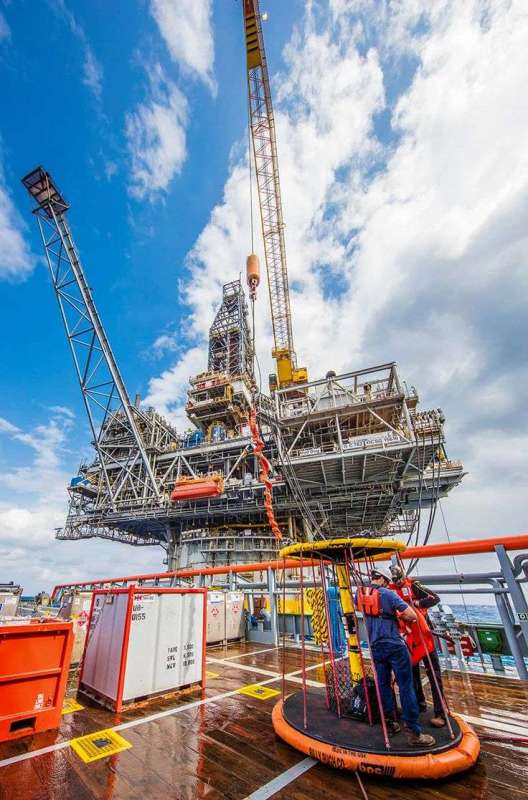
Dynamics and Potential of Oil and Gas in Indonesia

The oil and gas industry in Indonesia is one of the important sectors that contributes greatly to the national economy. This sector has a strategic role in providing energy for various industrial, household, and transportation sectors. The dynamics of the oil and gas industry in Indonesia are influenced by various factors, such as fluctuations in world oil prices, government policies, and technological developments. In addition, the oil and gas potential in Indonesia is still quite large and has not been fully explored.
Petroleum is known to have been detected in the archipelago through studies conducted by the Dutch East Indies Government in the Sumatra region, precisely on the coast of Aceh. Because the condition of the land is still very new and has never been explored, it took several years until finally in 1892 petroleum could be produced and marketed by Koninklijke Nederlandsche Maatschappij tot Exploitatie van Petroleumbronnen in Nederandsch-Indie or de Koninklijke. (Ooi, 1982: 1)
This article will discuss the dynamics and potential of the oil and gas industry in Indonesia in the last 10 years.
Dynamics of Oil and Gas Industry in Indonesia
The last decade of Indonesia's oil and gas industry (2014-2024) has been marked by complex dynamics, marked by changing challenges and opportunities. Fluctuations in global oil prices, energy transition, and various new regulations are the main factors that color the course of this industry.
Oil Price Fluctuations
Global oil prices had experienced significant fluctuations. In 2014, oil prices peaked above $110 per barrel, but then declined dramatically to reach $27 per barrel in 2016. These fluctuations have a major impact on state revenues and the domestic oil and gas industry. In the January-November 2014 period oil and gas revenues reached Rp265 trillion, while in January-November 2015 fell 58.1% to Rp111 trillion. (Source = Fiscal Policy Agency-Ministry of Finance of the Republic of Indonesia).
Meanwhile, in the period from 2022 to 2024, global oil prices also experienced significant fluctuations influenced by various geopolitical, economic, and industrial factors. At the beginning of 2022 oil prices were around $80 per barrel, driven by the global economic recovery after the COVID-19 pandemic, in the middle of the year Russia's invasion of Ukraine in February 2022 triggered a significant spike in oil prices, peaking above $130 per barrel in March 2022, then at the end of 2022 oil prices began to fall again in the second half of 2022, mainly due to fears of a global recession and rising oil supply from non-OPEC countries. In early 2023 oil prices opened around $80 per barrel, but rebounded amid geopolitical tensions and recovering global demand, in the middle of the year oil prices peaked above $120 per barrel in June 2023, driven by Western sanctions on Russia and the reopening of the Chinese economy after COVID-19 lockdowns, then at the end of 2023 oil prices began to fall again in the second half of 2023, mainly due to fears of a global recession and rising inflation in developed countries. At the beginning of 2024 oil prices opened around $70 per barrel, with an uncertain outlook amid global economic and geopolitical uncertainty, and in May 2024 oil prices were around $85 per barrel, with significant daily fluctuations. (Source = International Energy Agency (IEA))
Energy Transition
The issue of energy transition to renewable energy sources is one of the main challenges for the oil and gas industry. The Indonesian government is committed to reducing greenhouse gas emissions and increasing the use of renewable energy. This encourages the oil and gas industry to innovate and adapt by developing more environmentally friendly technologies and investing in renewable energy.
In response to this challenge, Indonesia has embarked on an energy transition process to move away from its reliance on fossil fuels and switch to more sustainable energy sources. This transition also has a significant impact on the oil and gas industry.
Challenges and Opportunities
In the midst of various challenges, Indonesia's oil and gas industry also has several opportunities to develop. Oil and gas reserves are still quite large, national economic growth, and increasing domestic energy demand are factors that support optimism in this industry.
● Opportunities in the Middle of a Crisis:
New Reserve Discovery: Amid declining global exploration activity, Indonesia is still discovering new oil and gas reserves. This shows the great potential of the oil and gas industry in the future.
New Investment: The government issues various policies to attract investment in the oil and gas sector, such as fiscal incentives and ease of licensing.
Renewable Energy Development: The Covid-19 pandemic has encouraged the energy transition towards renewable energy sources. This opens up new opportunities for the oil and gas industry to develop renewable energy businesses.
Oil and Gas Industry Potential in Indonesia
Although the oil and gas industry in Indonesia is experiencing dynamics, the potential of this sector is still quite large. Director of Upstream Oil and Gas Business Development of the Ministry of Energy and Mineral Resources, Noor Arifin Muhammad assessed that the investment climate in upstream oil and gas, especially in the gas sector, is still very attractive for international companies. This can be seen from the realization of investment in 2023 which reaches US $ 13.7 billion or around IDR 214 trillion. (Jakarta, CNBC Indonesia, 2024)
This potential has still not been fully explored. There are still many areas in Indonesia that have not been explored, especially in deep sea and offshore areas. In addition, in the past two years there have been considerable gas discoveries in Indonesia. For example, in the Timpan-1 well of Andaman II Block operated by Premier Oil, then the discovery of gas reserves in the North Ganal Working Area of the North-1 Geng well, East Kalimantan by Eni.
In addition, for exploration, Indonesia also still has total natural gas resources reaching 314.3 TCF. At least Indonesia has a top potential basin in three areas, namely Bintuni, Kutai, and North Sumatra. (Jakarta, CNBC Indonesia, 2024)

Figure 1. Map of potential oil and gas reserves in Indonesia
This map shows the distribution of potential oil and gas reserves in Indonesia in 2022. The red color indicates areas with high potential petroleum reserves, while the blue color indicates areas with high potential natural gas reserves.
Indonesia's oil and gas industry has considerable potential to develop in 2024. With various efforts made by the government and other stakeholders, it is hoped that the Indonesian oil and gas industry can reach its maximum potential and provide optimal benefits for the nation and state. However, the oil and gas industry is also faced with various challenges, especially the energy transition and fluctuations in global oil prices. The oil and gas industry's success in 2024 will depend on its ability to adapt to global changes, increase efficiency and effectiveness, and invest in renewable energy.
Popular Post
TOEFL PREPARATION #2 You didn't pass TEFL? Check out the content below!
TEFL Preparation
19 February 2024