News
Bioethanol: Increasing Energy Independence and Reducing Greenhouse Gas Emissions
28 September 2024 | CIC
Hello chemical engineering and food engineering students!
Do you know about energy independence and reducing greenhouse gas emissions? For those who are not familiar with energy independence and reducing greenhouse gas emissions, you can read this article to enhance your knowledge about energy independence and reducing greenhouse gas emissions. Is it really important? Of course,The important matter of this is we must consistently improve our knowledge of chemical engineering.
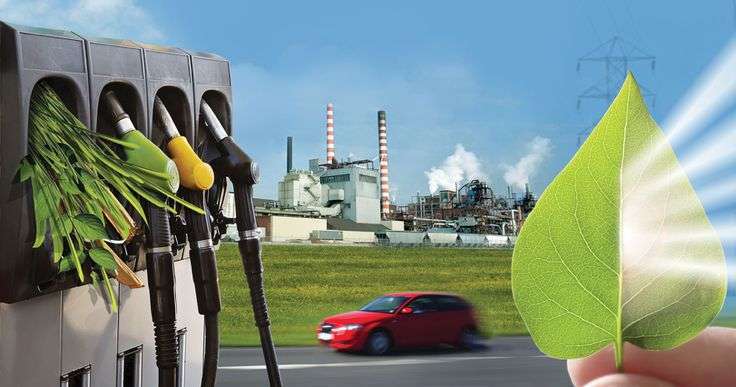
We in everyday life always have activities outside of our place of residence. When we want to travel, we need a vehicle and a vehicle uses fuel where this fuel is obtained from petroleum which in the combustion process produces exhaust gases in the form of Carbon Dioxide (CO2) and Carbon Monoxide CO. This Petroleum is also a non-renewable material so that it will run out as the use and use of vehicles around the world an Indonesia increase. Of course, petroleum cannot continue to be our daily use, and the government also continues to support biotechnology.

Bioethanol (C2H5OH) is an alternative fuel whose raw material is from plants containing carbohydrate / starch processed by fermentation methods with help of microorganism and distillation, an example is sugar cane. Sugar cane is used because contains sucrose that can be fermented into ethanol. If we compare bioethanol with other Pertamina fuel products, bioethanol has a higher octane of 115 than other fuel octane. Bioethanol is closely related to chemical engineering because we study how to process will take place and how ist utilization affects the environment. If we look in terms of the environment, quoted from CNCB INDONESIA bioethanol has a several benefits that considered ideal use within the scope of Indonesia :
REDUCING FUEL IMPORTS
The arrival of bioethanol is the first step in the government’s efforts to increase energy independence in the fuel sector. For now, the government still imports fuel from abroad for the need of fuel consumption in Indonesia. With the presence of bioethanol, it can be expected that later we can further utilize the raw materials owned in Indonesia so that we can reduce the cost of fuel imports.
STRENGTHENING RENEWABLE ENERGY
Since 1900 we have known the name coal, petroleum. In its use, this energy includes non-renewable energy so that its use will continue to decrease so that replacement energy or alternative energy is needed. Nowadays, the Indonesia government has started to change form non-renewable raw materials to renewable energy and the government continues to support the development of renewable energy.
REDUCING EXHAUST EMISSIONS
Exhaust emmisions today are the main target of problems in the world. Large levels of pollution and inadequate countermeasures, especially in Indonesia, which makes the government think of the right solution how to overcome it. Bioethanol has been testes that at the time of its use this fuel burns perfectly so that the emission gasses are wasted less
Bioethanol does have very good advantages for the sustainability of human life in the future, but, Bioethanol also has several disadvantages in its application.
HIGH RATE OF BIOETHANOL PRODUCTION AND USE
Bioetahnol does have many advantages in terms of the environment. But the production rate has a high cost because the cost for…. Bioethanol has a high octane value, therefore combustion will occur faster. However, the use of bioethanol reduce the mileage of the vehicle, which causes more bioethanol to be used. It is also feared that if 100% bioethanol is used immediately, there will be a significant increase in food prices in Indonesia. Bioethanol still receives taxes because ethanol is include in alcohol category.
LAND REQUIRED FOR EXTENSIVE PRODUCTION
Bioethanol is made from plants that have fermented starch and the materials used are not small because not all the content contained in sugar cane is starch. Therefore, if the government wants to increase production power, the government must be ready to provide large land. The land needs is also not only for planting land used as material but factory land as a manufacturing process.
THE NEED FOR ENGINE MODIFICATIONS TO THE VEHICLE
When using bioethanol in vehicles, we cannot use the same engine that we using gasoline. This is because vehicle engines are designed to use gasoline. So, modifications will be needed to the vehicles engine so that it can be use bioethanol appropriately. Currently, not all engines can use 100% bioethanol, even older engines cannot use 10% ethanol blended fuel.

Figure 1. PT Energi Agro Nusantara
One of the Industries developing bioethanol is PT. Energi Agro Nusantara. The Compony, located in Mojokerto, processes molasses into ethanol with high putrity level of 99.5%. This plant is specifically designed to produce ethanol with a capacity of 100 kL/day. The production itself has several stages ;
PROPAGATION
Propagation is a process where molasses will be diluted and added with Urea and NPK as nutrients. After that, the inoculation process will be carried out with yeast Saccharomyces Cerevisiae.
FERMENTATION
Fermentation is the process of converting carbohydrate, starch, and sugar into alcohol. In this process, the fermentation process will only take a few hours. The sugar contained in molasses will turn into ethanol with the hel of yeast Saccharomycer Cerevisiae.
EVAPORATION
Evaporation is a process of partial evaporation of a solvent that is heated to evaporate so as to obtain a liquid solution with a high concentration. After the process of fermentation, it will go through an evaporation process using tolls and 4 stages. The heated ethanol will evaporate and flow into the distillation column.
DISTILLATION
Distillation is a separation method based on the ease of vaporization. The disitillation column is carried out with the aim of separating ethanol from chemical compounds that are still fused with ethanol so that the ethanol produces is more pure.
DEHIDRATION
In this dehydration stage, ethanol will also be removed from the water concent that is still present in ethanol and will produce ethanol products reaching 99.5%

Indonesia is still far behind USA and Brazil, which produced 15,800 million gallons of ethanol in 2019 and 8,620 million gallons in the same year. This shows how far behind Indonesia is in utilizing bioethanol. The government should be focus more on the development of renewable fuels.
It is crucial for chemical engineering and food engineering students to stay informed and up-to-date on topics such as energy independence and reducing greenhouse gas emissions, as this knowledge is vital for their understanding of the chemical industry. By doing so, they can expand their knowledge base and satiate their thirst for learning, ultimately enhancing their professional prospects. In conclusion, the importance of energy independence and reducing greenhouse gas emissions cannot be overstated, and it is essential for students to stay informed about this crucial aspect of chemical engineering.
References :
Aditia, H., & Rahmawati, Y. (2020). Potensi bioethanol dari limbah pertanian sebagai alternatif bahan bakar di Indonesia. Jurnal Energi dan Lingkungan, 15(2), 125-134.
Budi, S. E., & Kurniawan, T. (2018). Bioethanol sebagai bahan bakar alternatif: Tinjauan tentang potensi dan tantangannya. Jurnal Energi Terbarukan dan Teknologi, 8(4), 85-92.
Supriyadi, D., & Marwoto, A. (2019). Analisis pengolahan bioethanol dari molasses dengan fermentasi menggunakan Saccharomyces cerevisiae. Jurnal Teknologi Kimia dan Lingkungan, 10(1), 50-59.
Sari, R. P., & Iskandar, J. (2021). Studi perbandingan emisi gas rumah kaca antara bioethanol dan bahan bakar fosil. Jurnal Ilmu Lingkungan, 12(3), 200-210.
Popular Post